

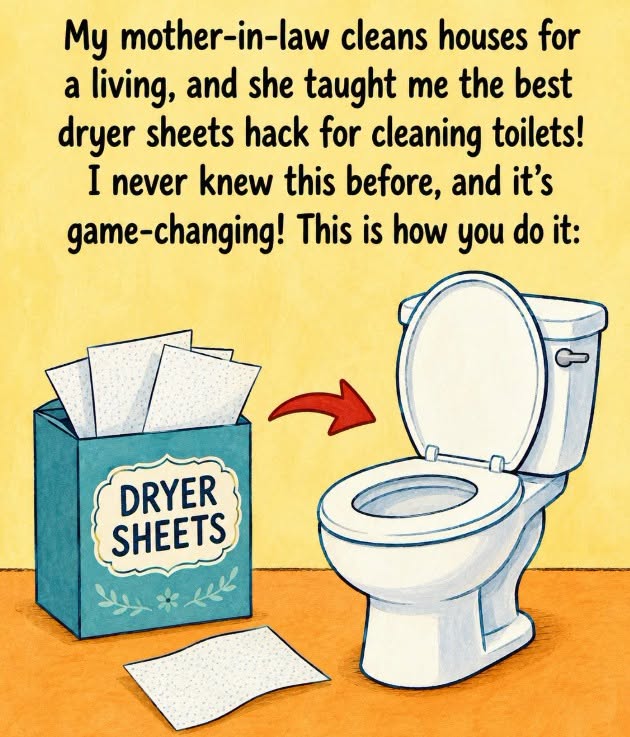
But that doesn’t mean it will remove every toilet ring, mineral deposit, or stain.
Hard-water buildup and limescale often need a cleaner designed to dissolve mineral deposits, rather than simply rubbing the area with a sheet.
How to Try the Dryer Sheet Hack
If you want to experiment with this method, use it cautiously and only on a compatible surface.
Step 1: Choose a Dryer Sheet
Use a fresh dryer sheet rather than one that has already been through a load of laundry.
Check the product label and avoid using a sheet that contains ingredients you don’t want transferred to the toilet surface.
Step 2: Put on Cleaning Gloves
Wear household cleaning gloves before handling toilet residue or using a dryer sheet in the bowl.
Keep the sheet away from your face, and wash your hands after cleaning.
Step 3: Dampen the Sheet
Lightly dampen the dryer sheet with water.
You don’t need to soak it. The goal is simply to make it easier to handle and rub against the surface.
Step 4: Rub a Small Area Gently
Choose a small, inconspicuous area of the toilet bowl and gently rub the mark.
Avoid aggressive scrubbing, abrasive tools, or anything that could damage the finish.
If the mark doesn’t begin to loosen, don’t keep rubbing harder. A suitable toilet cleaner is a better next step.
Step 5: Flush and Inspect
After removing the sheet, flush the toilet and check whether the mark has improved.
Don’t flush the dryer sheet itself. Put it in the trash instead. Dryer sheets are not designed to break down like toilet paper and can contribute to plumbing blockages.
Step 6: Clean and Disinfect Properly
For routine toilet cleaning, use a toilet cleaner according to its label, along with an appropriate toilet brush.
If disinfection is needed, use a product specifically labeled for that purpose and follow its directions.
Never mix cleaning products, particularly bleach with acidic cleaners or ammonia-containing products.
What Can a Dryer Sheet Actually Remove?
This is where expectations matter.
A dryer sheet may help with some superficial residue, but it isn’t a reliable solution for every kind of toilet stain.
Light Surface Marks
Some light marks may respond to gentle rubbing, depending on their cause and the toilet’s surface.
Results aren’t guaranteed.
Hard-Water Rings
Hard-water rings are often caused by mineral deposits. These generally respond better to a toilet cleaner designed for limescale or hard-water stains.
Follow the product directions and use only a cleaner suitable for your toilet.
Rust Stains
Rust-colored marks may require a cleaner formulated for rust or mineral staining. A dryer sheet is unlikely to be the most effective option.
Mold or Other Biological Growth
A dryer sheet should not be used as a substitute for appropriate cleaning and disinfection when biological growth is present.
Use a suitable bathroom cleaner, follow the label, and address any persistent moisture problems.
Important Safety Tips Before Trying This Hack
A household trick is only useful if it doesn’t create another problem.
Keep these points in mind:
- Never flush dryer sheets. Dispose of them in the trash.
- Don’t mix cleaning chemicals. Combining bleach with acidic cleaners or ammonia can produce dangerous gases.
- Check the toilet’s finish. Avoid harsh rubbing on surfaces that may scratch or become damaged.
- Keep dryer sheets away from children and pets. Laundry products are not intended to be handled or ingested.
- Don’t rely on dryer sheets to disinfect. Use a product specifically labeled for disinfection when needed.
- Follow product labels. This applies to both laundry products and bathroom cleaners.
If a stain persists despite ordinary cleaning, identifying its cause is usually more effective than trying increasingly aggressive scrubbing methods.
Better Alternatives for a Stubborn Toilet Ring
If the dryer sheet doesn’t do the trick, don’t worry. There are more reliable options.
Use a Toilet Cleaner for Mineral Deposits
For limescale or hard-water rings, choose a toilet cleaner designed to remove mineral buildup.
Follow the directions carefully, and never combine it with bleach or another cleaner.
Use a Toilet Brush
A regular toilet brush is designed for routine cleaning and can help remove loose residue without requiring you to reach into the bowl.
Choose one suitable for your toilet’s finish.
Address the Waterline
If a ring keeps returning at the same level, mineral-rich water may be contributing to the buildup.
Regular cleaning with an appropriate product can help prevent the deposit from becoming more difficult to remove.
Keep Up With Routine Cleaning
Frequent, gentle cleaning is generally easier than waiting until deposits become thick and stubborn.
A little maintenance can save you from a much longer scrubbing session later.
Frequently Asked Questions
Does a dryer sheet really clean a toilet?
It may help rub away some superficial marks, but its effectiveness isn’t well established. It doesn’t replace a toilet cleaner or disinfectant.
Can I use a used dryer sheet?
A used sheet may have less of its original conditioning ingredients, and its effectiveness for cleaning isn’t predictable. A dryer sheet isn’t necessary for routine toilet cleaning.
Can I flush a dryer sheet after using it?
No. Put it in the trash. Dryer sheets are not designed to dissolve in water and may contribute to plumbing problems.
Will a dryer sheet remove hard-water stains?
It’s not a reliable treatment for mineral deposits. A toilet cleaner designed for hard-water buildup or limescale is generally a better choice.
Does this hack disinfect the toilet?
No. Dryer sheets aren’t toilet disinfectants. Use a product labeled for disinfection when that is needed.
Can dryer sheets scratch a toilet bowl?
A dryer sheet is relatively soft, but rubbing can still be a concern if the surface has a delicate finish or if grit becomes trapped between the sheet and the bowl. Test cautiously and avoid abrasive scrubbing.
Can I use dryer sheets on the toilet seat?
It’s better to use a bathroom cleaner suitable for the seat’s material. Laundry-product residues may remain on the surface, and the seat is an area that frequently comes into contact with skin.
How often should I clean my toilet?
For most households, regular cleaning at least weekly is a useful starting point. High-use bathrooms may need more frequent attention.
Final Thoughts
The idea of using a dryer sheet to clean a toilet is certainly an interesting household hack—and it may help with a few superficial marks in the right circumstances.
But it’s not a miracle cleaner.
It won’t reliably dissolve hard-water buildup, remove every stubborn stain, or disinfect your toilet.
If you decide to try it, rub gently, never flush the sheet, and finish with an appropriate toilet-cleaning product when needed.
And remember: sometimes the best cleaning shortcut isn’t the most unusual one. It’s simply using the right product for the job.
More Simple Home-Cleaning Tips to Try
If you enjoy discovering practical ways to make everyday chores easier, you might also like:
- How to Remove Hard-Water Stains From Bathroom Fixtures
- Simple Ways to Keep Your Toilet Fresh Between Cleanings
- How to Clean Soap Scum From a Shower
- Everyday Laundry Habits That Help Clothes Last Longer
- Common Cleaning Products You Should Never Mix
Have You Tried This Dryer Sheet Hack?
Have you ever used a dryer sheet for a household-cleaning job beyond laundry?
I’d love to hear what worked for you—and what didn’t!
Leave a comment and save this article to Pinterest so you can revisit these cleaning tips the next time you’re tackling a stubborn bathroom stain.
Sometimes the simplest household ideas are worth exploring, as long as we know their limits and use them safely.