
My sister is its chief executive. She has been since 2016.
The audit next week is the foundation’s annual audit, brought forward by a new trustee who asked one reasonable question in the spring.
And the missing million is eleven years of Celestine taking from it, in small pieces, through consultancy invoices and an events company that has one director.
Then I turned to the second section of that file.
And I found out what that foundation is called.
It is named after me.
It was registered in 2014 using my birth name — Petra Fisk — which is a name I stopped using at eighteen, when I took Norah’s.
There is a logo with my initials in it.
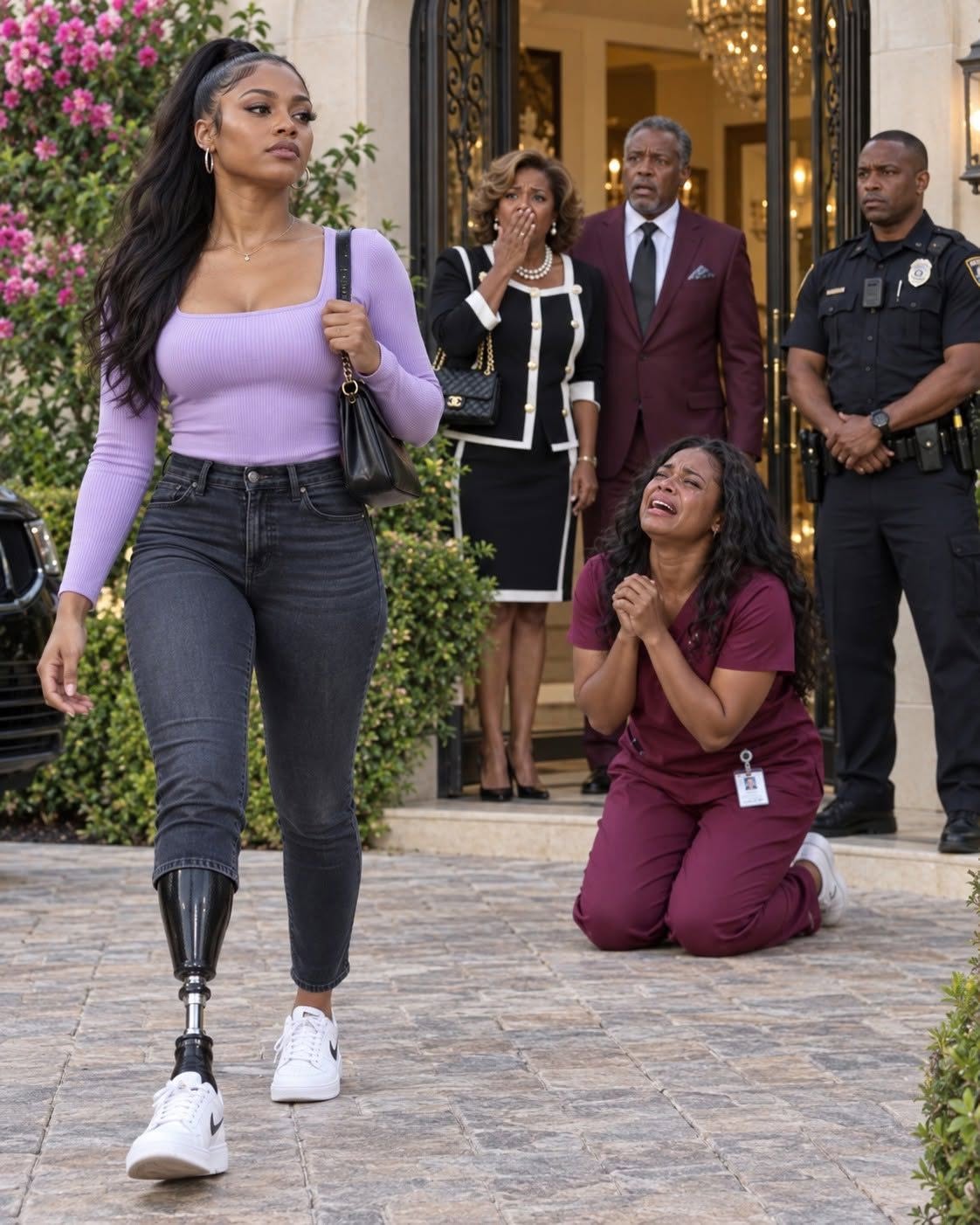
There is a paragraph on the website about the young woman it is named for, who lost a leg to bone cancer at ten and went on to build a company, and who prefers to keep her involvement private.
That last clause is the piece of work in all of this that I admire most, in the way you admire a good lock.
Because it explains, in six words, why nobody has ever seen me at anything. Why there is no photograph. Why a donor who asked would be told, gently, that she does not do events.
They did not have to lie about me once.
They just had to say I was private, which is true, and which I have been saying about myself for nineteen years.
And I put in a paragraph about how much I had raised for other people, which is also true, and which came from three real grants the foundation made in 2015 to three real people, whose photographs are on that website and who are perfectly well and who I have since spoken to.
It was a real charity. That is the part people find hardest.
For the first two years it was entirely real, and it helped eleven people, and then my sister worked out that nobody checks a charity with a sad story and a good logo.
They stole my identity when I was a child to buy my sister clothes.
And then they did it again, in 2014, at scale, in public, with a logo and a gala and a paragraph about my life — and ran it for eleven years.
PART 4
Then there is Tamsin.
Tamsin Reyes. Twenty-four. She was a barista and a part-time sports coach and she came off a moped in the January of 2023.
Her leg was saved. There was a window — about fourteen months — in which a particular reconstruction had a good chance of getting her walking properly again. That is the short version and it is not mine to give in full.
Her health insurance covered part of it. Not the rest.
She applied to that foundation in the March.
She was approved in the April. There is a letter in the file on foundation paper with the logo on it, congratulating her and setting out the amount.
The money never came.
She followed up three times. In the June, in the September, and in the January of 2024.
And in the February she got a refusal, citing a review of eligibility criteria.
By then the window had closed.
She has had two further operations. She uses a wheelchair. The current position is that she may get some walking back with a frame over the next few years and she may not.
And in the part of that application form that asks why you are applying to this particular fund, Tamsin wrote three sentences.
I have read them more times than is sensible.
She wrote that she had read about the woman the foundation is named after. She wrote that she had read it twice.
And she wrote: someone with her story will understand what this is for.
She applied because of my name.
She sat at a kitchen table fifteen months after her accident and typed a sentence about trusting a stranger who had been through it — and the stranger was me, and I had never heard of her, and the woman reading the form was my sister.
There is one more document in that section and Arvo put it in deliberately. He told me so.
It is an internal note. Four lines, from Celestine to the foundation’s administrator, dated eleven days after Tamsin was approved.
It says to hold the Reyes payment for the next quarter.
And then it says: she’s young, she’ll have other options.
That is the only sentence in nine million dollars of paperwork where my sister explains herself, and it took her eleven words.
I knew that voice immediately.
It is my mother’s, at a hospital bed, in 1999, working out what to do with a problem.
PART 5
Now my part, and there is no honest version of this without it.
I knew about that foundation.
Not the theft. Not Tamsin. Nothing in that file.