

Why People Often Misidentify Them
Today, vintage button hooks frequently puzzle people because their design resembles several other antique tools.
They’re sometimes mistaken for:
- Dental instruments.
- Surgical tools.
- Fireplace tools.
- Leatherworking tools.
- Antique crochet hooks.
- Shoe repair tools.
- Engraving instruments.
Without historical context, it’s easy to understand why these objects appear mysterious.
Could They Be Valuable?
Many antique button hooks have become collectible.
Their value depends on several factors, including:
- Age.
- Manufacturer.
- Materials.
- Decorative craftsmanship.
- Overall condition.
- Historical significance.
Rare examples featuring sterling silver, carved ivory (where legally collectible), or famous manufacturers may attract collectors of antique clothing accessories.
Ordinary steel examples generally have modest value but remain interesting historical artifacts.
How to Identify Antique Button Hooks
If you discover similar tools, look for clues such as:
- Manufacturer’s marks.
- Patent numbers.
- Decorative engravings.
- Silver hallmarks.
- Unique handle materials.
Researching these markings may help determine when and where they were produced.
Caring for Vintage Metal Tools
If these items have sentimental or collectible value, proper care is important.
Consider these tips:
- Store them in a dry environment.
- Remove loose dust with a soft cloth.
- Avoid harsh chemical cleaners.
- Prevent prolonged exposure to moisture.
- Preserve original finishes whenever possible.
For highly valuable antiques, professional conservation may be preferable to aggressive polishing.
The Fascinating History Behind Everyday Objects
One of the most rewarding aspects of family heirlooms is discovering the stories behind them.
Ordinary household items often reveal how previous generations lived.
They remind us that everyday tasks once required tools we rarely think about today.
Simple inventions like the button hook made daily routines more convenient long before modern clothing technology transformed fashion.
Preserving Family History
When grandparents or other relatives pass away, it’s tempting to discard unfamiliar objects during the process of cleaning out a home.
However, taking time to identify unusual items can preserve important pieces of family history.
You may discover objects connected to:
- Occupations.
- Hobbies.
- Military service.
- Travel.
- Personal collections.
- Everyday household life.
Even inexpensive tools can carry tremendous sentimental value because of the stories they represent.
Could These Have Been Used for Something Else?
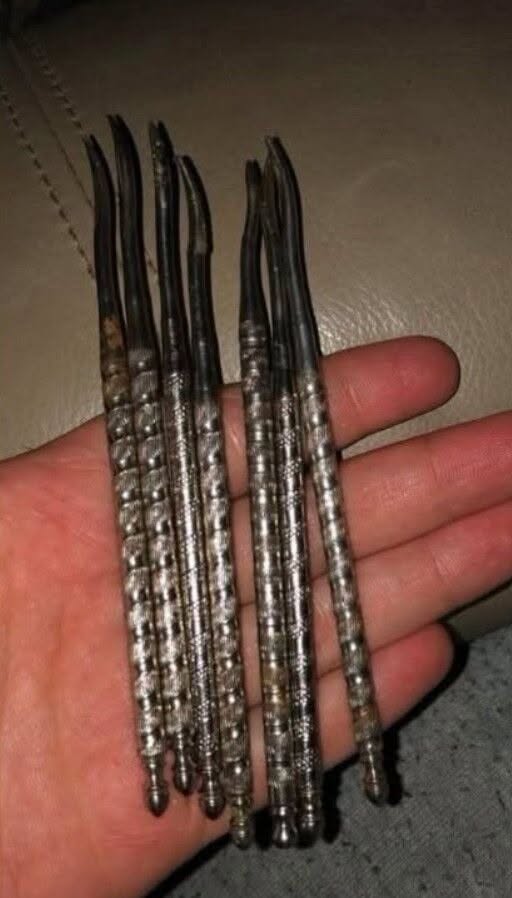
While the objects in the image strongly resemble vintage button hooks, it’s worth remembering that many antique tools share similar shapes.
Without additional markings, packaging, or family history, it’s impossible to identify them with complete certainty from a single photograph alone. They could potentially belong to another specialized tool category.
If you’re curious, checking for engraved names or patent numbers—or showing them to an antiques dealer or local museum—may help confirm exactly what they are.
Conclusion :
Finding mysterious objects among a loved one’s belongings can turn an ordinary day of sorting through keepsakes into an unexpected journey through history. The unusual metal tools shown in the image most closely resemble vintage button hooks, practical accessories that once made fastening the tiny buttons on boots, gloves, dresses, and jackets much easier.
Though they have largely disappeared from modern life, they were once indispensable items found in homes around the world.
Whether these particular tools are indeed button hooks or another type of antique implement, they serve as a reminder that everyday life has changed dramatically over the past century.
Countless objects that were once essential have become unfamiliar as technology, fashion, and lifestyles evolved. Taking the time to learn about these forgotten items not only satisfies curiosity but also helps preserve the memories and traditions of earlier generations.
Before deciding to discard unusual heirlooms, consider researching their history or consulting an antiques expert. What first appears to be a mysterious collection of old metal tools may turn out to be a fascinating piece of family history—one that connects the past with the present and keeps the stories of those who owned them alive for future generations.