

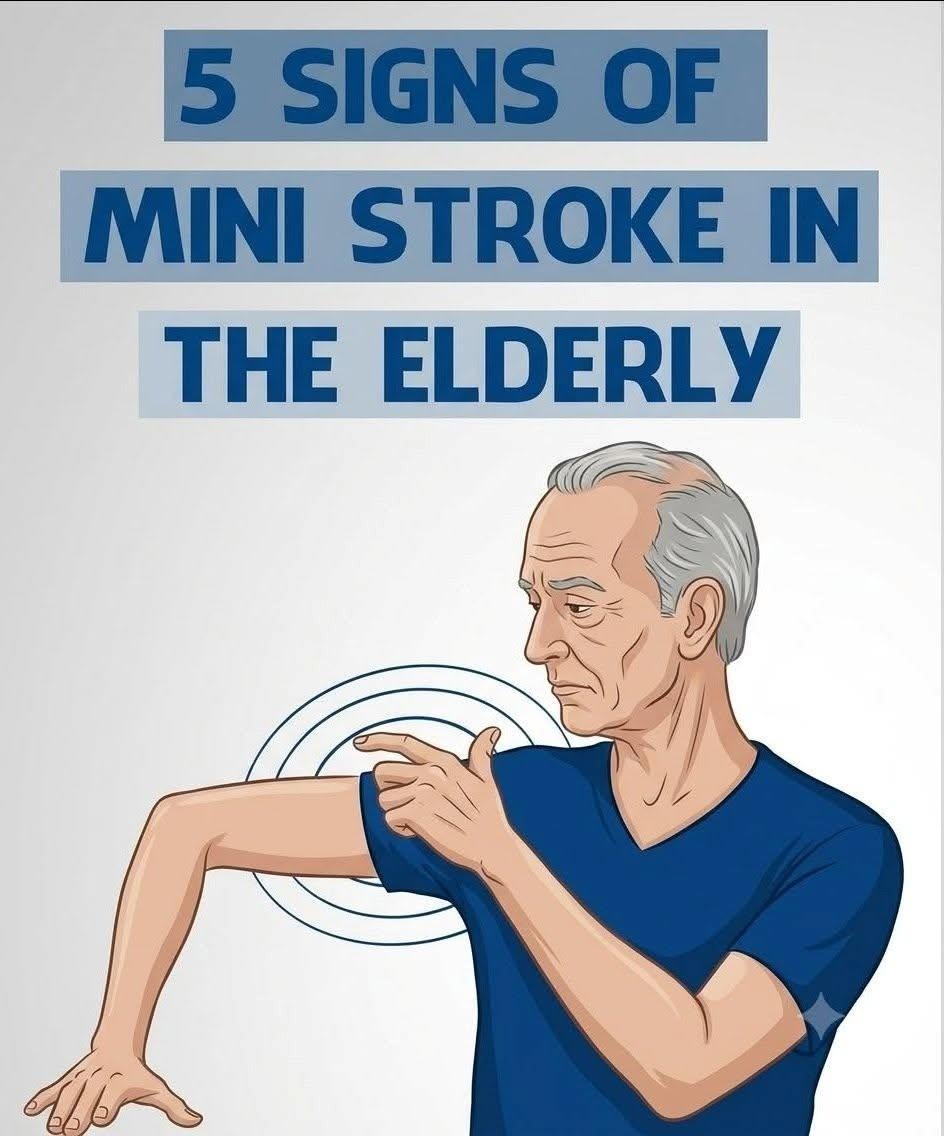
One arm becomes weak, numb, or drifts downward.
### S — Speech
Speech becomes slurred, strange, or difficult.
### T — Time
Call emergency medical services immediately.
The American Stroke Association recommends B.E. F.A.S.T. as a rapid way to recognize possible stroke symptoms.
## What Should You Do If Symptoms Disappear?
Do not continue your day as normal.
You cannot reliably tell at home whether the episode was a TIA, a completed stroke, or another neurological condition.
Medical evaluation may include:
* A neurological examination
* Blood tests
* CT or MRI imaging
* Imaging of blood vessels
* Heart-rhythm testing
* Evaluation for atrial fibrillation
* Blood pressure and cardiovascular assessment
The American Stroke Association recommends comprehensive evaluation as soon as possible, ideally within 24 hours of symptom onset.
## Who Is at Greater Risk?
Anyone can experience a TIA, but risk rises with certain conditions and lifestyle factors.
Important risk factors include:
* High blood pressure
* Diabetes
* Atrial fibrillation
* Cardiovascular disease
* Smoking
* Previous stroke or TIA
* Blood clots
* Older age
The American Stroke Association identifies high blood pressure, diabetes, heart disease, atrial fibrillation, and smoking among major TIA and stroke risk factors.
Managing these risks can significantly reduce the chance of future stroke.
## When to Seek Emergency Help
Call emergency medical services immediately if someone suddenly develops:
* Facial drooping
* One-sided weakness or numbness
* Speech problems
* Vision loss
* Severe balance problems
* Confusion
* A sudden unexplained severe headache
Do this **even if the symptoms improve after only a few minutes**.
Do not wait for another episode.
## The Bottom Line
Mini-strokes often go unnoticed because their symptoms can disappear rapidly.
But sudden **weakness, numbness, facial drooping, speech difficulty, vision changes, dizziness, loss of balance, confusion, or an unusual severe headache** can all be warning signs of a TIA or stroke.
A TIA is not something to monitor at home and hope does not return.
If stroke-like symptoms occur, remember **B.E. F.A.S.T.** and seek emergency medical care immediately—even when the person seems completely recovered afterward.