
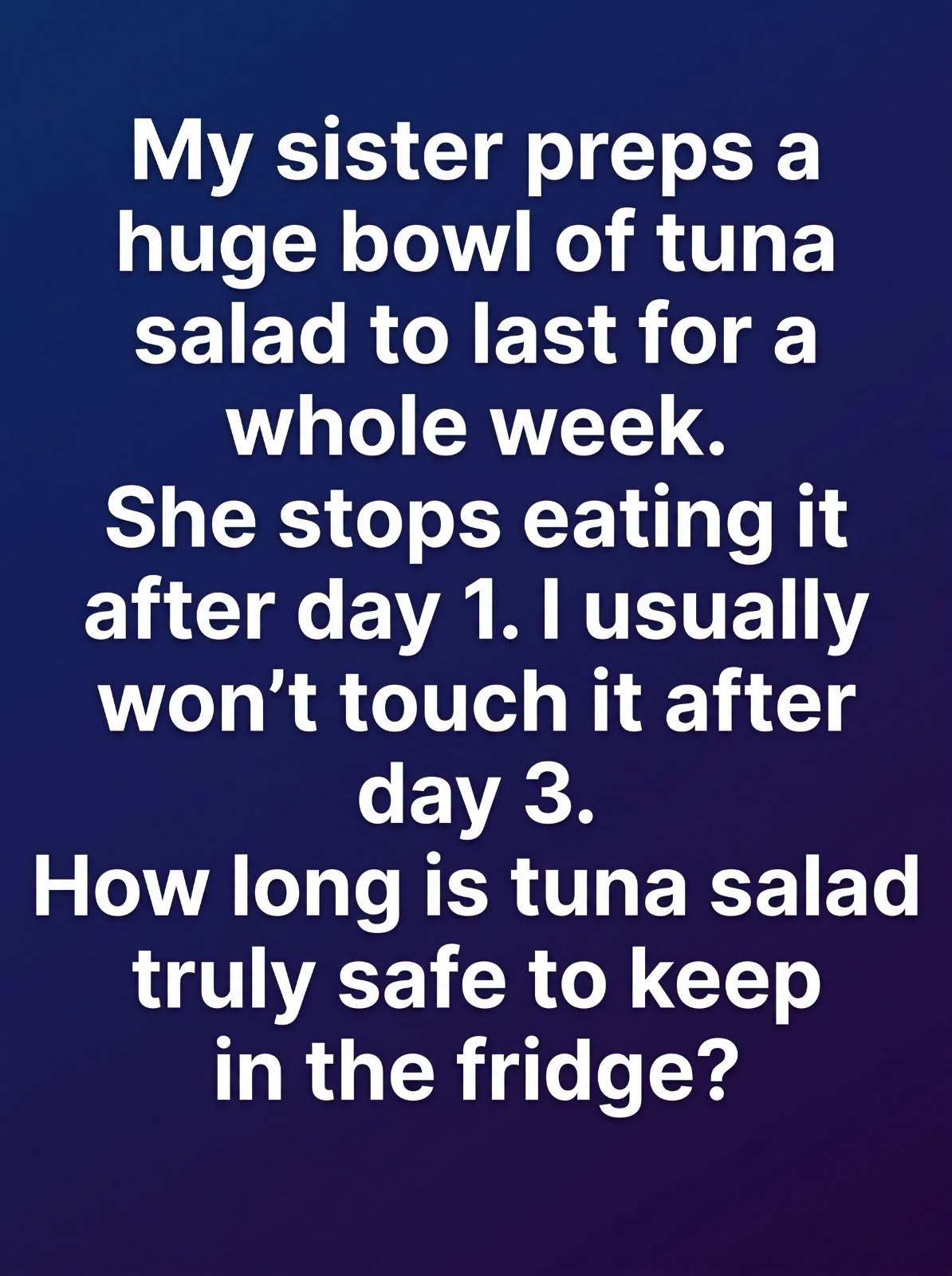
The safest approach is to follow the 3-to-5-day refrigerator window.
Once tuna salad has reached the end of that period, it’s best to discard it rather than trying to stretch its shelf life.
And if it was left unrefrigerated for too long at any point, the safe storage period may be shorter.
When it comes to perishable foods, the date isn’t the only factor—the entire storage history matters.
Can You Tell If Tuna Salad Has Gone Bad?
Sometimes spoiled food has obvious warning signs.
You might notice:
- An unpleasant or unusual odor
- A change in texture
- Visible mold
- Unusual discoloration
- A noticeably different appearance
But here’s the important part:
You cannot reliably determine whether food is safe simply by smelling or tasting it.
Some harmful bacteria can be present without creating an obvious change in smell, taste, or appearance.
So don’t take a tiny bite just to “see if it’s still good.”
If the tuna salad has been stored too long or you’re uncertain about how it was handled, it’s safer to throw it away.
What Happens If You Eat Spoiled Tuna Salad?
Eating contaminated food can result in foodborne illness.
Possible symptoms include:
- Nausea
- Vomiting
- Diarrhea
- Abdominal cramps
- Fever
Symptoms can range from mild to serious, and some people are more vulnerable to complications than others.
Young children, older adults, pregnant people, and individuals with weakened immune systems need to be particularly careful with food safety.
That’s why I always say: saving a few spoonfuls of tuna salad isn’t worth risking your health.
Does Mayonnaise Make Tuna Salad Go Bad Faster?
Mayonnaise often gets blamed for spoilage, but the bigger issue is the finished perishable mixture and how it is handled.
Commercial mayonnaise itself is relatively stable when stored according to its label instructions.
Once it’s mixed with tuna, vegetables, and other ingredients, however, you’ve created a prepared food that requires refrigeration.
So the important rule isn’t simply “mayo goes bad.”
It’s keep the finished tuna salad properly chilled and use it within the recommended timeframe.
Does Adding Celery or Onion Change the Shelf Life?
Celery, onion, relish, pickles, and other additions can affect the salad’s texture and quality over time.
For example, vegetables can release moisture, which may make the tuna salad watery after a few days.
But these changes shouldn’t be used to extend or override the recommended food-safety storage period.
Even if the salad still looks appetizing, follow the appropriate storage window.
Can You Freeze Tuna Salad?
Freezing isn’t usually the best choice for traditional mayonnaise-based tuna salad.
The ingredients can separate during freezing and thawing, resulting in a watery or unpleasant texture.
If you want to prepare tuna ahead of time, you’re generally better off preparing the tuna component and adding fresh mayonnaise and vegetables closer to serving.
A Simple Tuna Salad Storage Checklist
Want an easy rule to remember?
When You Make It
Prepare the tuna salad using clean utensils and fresh ingredients.
After Preparing It
Transfer it to a covered, airtight container.
Refrigerate
Keep it at 40°F (4°C) or colder.
While Serving
Take out only the amount you plan to eat and return the rest to the refrigerator promptly.
Within 3–5 Days
Enjoy the refrigerated tuna salad within the recommended window.
When in Doubt
If you don’t know how long it has been sitting out or how it was stored, throw it away.
Frequently Asked Questions
How long does homemade tuna salad last in the fridge?
Properly refrigerated homemade tuna salad is generally best used within 3 to 5 days.
How long does tuna salad last at room temperature?
Tuna salad should not sit at room temperature for more than about 2 hours, or 1 hour when the temperature is above 90°F.
Can I eat tuna salad that is 6 days old?
It’s safest to discard tuna salad once it has gone beyond the recommended 3-to-5-day refrigerated storage period.
Does tuna salad need to be stored in an airtight container?
An airtight container is recommended because it protects the food, helps maintain quality, and limits exposure to other foods and odors in the refrigerator.
Can I smell tuna salad to see if it’s safe?
No. Smell and appearance aren’t reliable ways to determine whether food is safe to eat. Harmful bacteria may not produce obvious warning signs.
Can I freeze tuna salad?
Traditional mayonnaise-based tuna salad generally doesn’t freeze particularly well because the texture can change after thawing.
What is the best temperature for storing tuna salad?
Keep it refrigerated at 40°F (4°C) or below.
Final Thoughts
Tuna salad may be one of the simplest foods in the refrigerator, but it’s still important to treat it like the perishable food it is.
The good news is that the rule is easy to remember:
Keep it cold, keep it covered, and eat it within 3 to 5 days.
Don’t rely solely on smell or appearance, and don’t taste questionable leftovers just to see whether they’re still good.
I love a good leftovers meal as much as anyone, but there are some foods that simply aren’t worth taking a chance on.
A fresh sandwich, a few crackers, and a scoop of properly stored tuna salad?
Now that’s a lunch I can get behind!
More Helpful Food Storage Guides
If you’re trying to make your refrigerator work a little smarter, you may also want to learn:
- How long chicken salad lasts in the fridge
- How long egg salad stays fresh
- How long cooked chicken lasts in the refrigerator
- How long leftovers are safe to eat
- The best way to store homemade sandwiches
- How to tell when refrigerated food should be discarded
Share This Food Safety Tip
Know someone who always seems to have a mystery container of tuna salad hiding in the back of the refrigerator?
Send this article their way!
And if this guide helped settle a family debate about how long tuna salad keeps, save it to Pinterest so you can easily find these storage guidelines later.