
- A pull-out cabinet with missing hardware
- A tall storage space that seems unusually empty
If the rack fits a cabinet opening rather than an oven cavity, it could have been part of a storage or organization system.
Look Closely at the Rack: These Details Matter
Before deciding what it is, take a few measurements and examine the construction.
Measure the Width and Depth
Don’t rely on the phrase “about the size of an oven.”
Measure the rack from edge to edge, including any handles or protruding brackets.
Then compare those measurements with the inside dimensions of the oven and any nearby cabinets.
A close match is a useful clue, although it doesn’t prove the rack belongs there.
Examine the Edges
Are the sides flat, bent upward, or fitted with rails?
Does the rack have hooks at the back?
Are there notches or tabs that look designed to fit into supports?
Those small details can reveal whether the rack was meant to slide, hang, rest on a surface, or attach to another component.
Check the Material
The metal itself can offer hints.
- Chrome-plated wire: Often found on household oven racks, cooling racks, and storage shelves.
- Stainless steel: May be used in kitchen equipment, food-preparation areas, and commercial-style appliances.
- Heavy steel: Could indicate a rack designed to support substantial weight.
- Thin wire: May suggest lightweight storage or cooling rather than heavy cookware support.
These are general clues, not definitive identification rules. Different manufacturers use different materials and finishes.
Look for a Brand or Part Number
This is one of the most useful things you can do.
Check the underside, corners, and edges for stamped numbers, labels, or a manufacturer’s name.
If you find a part number, search for it alongside terms such as oven rack, warming drawer shelf, or wire cabinet rack.
A matching part number can be much more reliable than guessing based on appearance alone.
How to Identify the Rack in a Few Simple Steps
If the mystery is still unsolved, here’s the order I’d follow.
- Measure the rack. Record its width, depth, and approximate height.
- Inspect the current oven. Look for rails and supports that match its shape.
- Check nearby cabinets. Look for missing shelves, pull-out hardware, or empty brackets.
- Search for markings. A model number or manufacturer’s name may narrow the possibilities.
- Take photographs. Photograph the whole rack, the corners, the underside, and any unusual hooks or attachments.
- Compare the details. Look for an exact match rather than relying only on a similar-looking image.
If you want help identifying it, clear photos of the rack from several angles—along with its measurements—would be especially useful.
A picture of where it was found can help, too.
Is It Safe to Use the Rack?
That depends on what it was designed for.
If it turns out to be an oven rack, make sure it fits securely and is appropriate for the appliance before using it.
If it appears to be a cooling or storage rack, don’t automatically assume it is suitable for direct contact with hot cookware or food.
Check for rust, flaking coatings, sharp edges, bent supports, and other damage.
If the rack has an unknown coating or you cannot establish whether it is food-safe, avoid using it directly with food until you can identify it.
And if it appears to belong to an electrical appliance, warming drawer, or other specialized equipment, don’t force it into place.
A rack should fit naturally into its intended supports—not require bending, wedging, or guesswork.
Why Do Previous Owners Leave Strange Kitchen Items Behind?
This is one of the fun things about moving into a different home.
People often leave behind items that seem ordinary to them but mysterious to the next owner.
Sometimes the item belongs to an appliance that has been replaced.
Sometimes it was custom-made for a particular cabinet.
And sometimes the previous owner simply forgot what it was for!
Kitchen accessories can be especially confusing because many racks and shelves look similar even when they were designed for completely different purposes.
The good news is that you don’t necessarily need to know the entire history of the house to solve the mystery. A few measurements and a closer look at the surrounding fixtures may be enough.
Frequently Asked Questions
Could the rack be an oven shelf?
Yes. If its dimensions and edge supports match the oven cavity, it may be an oven rack or a replacement shelf. Check the oven’s rails and model information before using it.
Why would an oven rack be outside the oven?
It may have been removed for cleaning, stored separately, or left behind after an appliance replacement. Its presence outside the oven doesn’t necessarily mean it belongs to another appliance.
Could it be a cooling rack?
Possibly. Open wire construction and feet that elevate the rack above a countertop may suggest a cooling rack, but a rack’s size alone isn’t enough to identify it.
Could it belong to a warming drawer?
Yes, if the home has or once had a warming drawer or separate warming compartment. Look for matching rails and measurements.
What if it doesn’t fit the current oven?
It could belong to a previous appliance, a cabinet system, or a different type of kitchen equipment. Check for manufacturer markings and compare the rack with nearby spaces before ruling anything out.
Can I use it as a baking rack if I can’t identify it?
It’s best not to use an unidentified rack with food or high heat until you’ve established what it is made from and whether its construction and coating are suitable for that purpose.
What’s the best way to get help identifying it?
Take clear photographs from the top, bottom, sides, and corners. Include a ruler or tape measure for scale, and photograph any brackets, hooks, labels, or stamped numbers. Those details can make identification much easier.
Final Thoughts
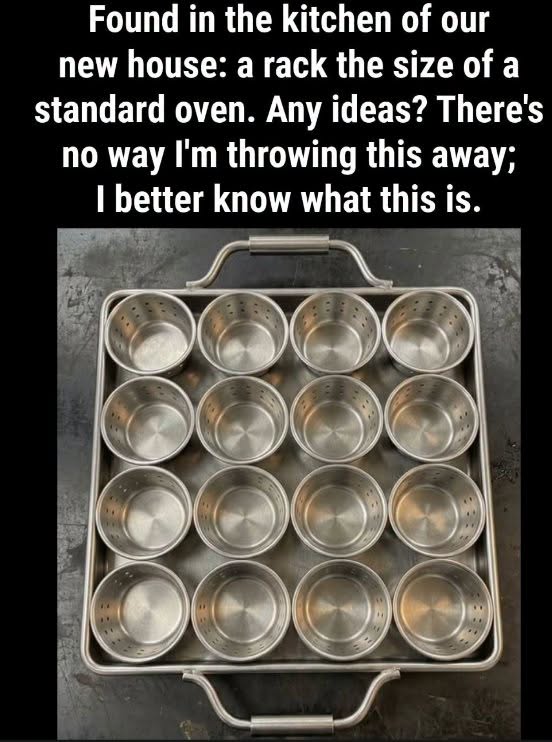
Finding a rack the size of a standard oven in the kitchen of a new house is exactly the kind of small mystery that makes exploring a home interesting.
It could be an oven shelf, a rack from an older appliance, a cooling rack, part of a warming drawer, or a component from a built-in cabinet.
The trick is not to settle on the first explanation that sounds plausible.
Measure it. Look at the edges. Check the oven and nearby cabinets. And if there’s a manufacturer’s mark, start there.
Those little clues can turn an odd piece of metal into a surprisingly easy puzzle to solve.
And if you’re still stumped, don’t worry—you may be one good photograph away from figuring it out!
More Everyday Home Mysteries to Explore
If you enjoy discovering the purpose behind unusual things around the house, you might also enjoy:
- What Is That Strange Little Kitchen Tool? It’s an Egg Topper Cutter!
- Why Do Some Wall Outlets Get Installed Upside Down?
- What Is the Small Door on the Back of a Truck Trailer For?
- Why Do Older Homes Have Unusual Built-In Cabinets?
- What Are Those Mysterious Metal Rails Inside Kitchen Cabinets?
Have You Found Something Similar?
Have you ever moved into a house and discovered a kitchen item you couldn’t identify?
Tell us what it looked like in the comments. If you’ve found a rack like this one, share its measurements, the type of metal, and whether it has hooks or rails.
And if you enjoy these little household mysteries, share this article or save it on Pinterest so you can come back to it later.
Sometimes the smallest discoveries lead to the most interesting stories!