

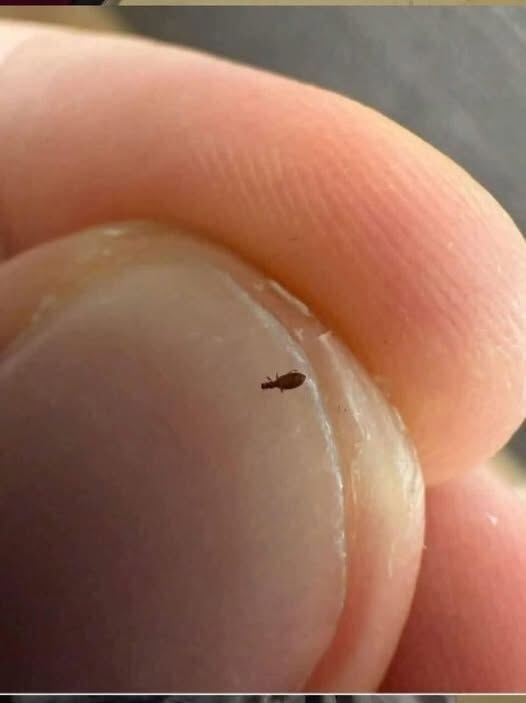
They prefer to hide in the seams of clothing, mattresses, or furniture, only coming out briefly to feed on exposed skin. Finally, what appears to be a bug is very often inanimate debris. A piece of lint, a stray seed from a plant, a flake of dried hair product, or general environmental dust can easily become caught in the strands and mimic the appearance of a tiny insect.
A Calm, Step-by-Step Self Check Before panic sets in, run through a few simple observational questions with your friend to help narrow down the possibilities. First, consider the movement. Did the speck jump or fly away?
Head lice do not have wings and are physically incapable of jumping. If the object leaped, it is almost certainly a flea or another type of agile insect. If it crawled, observe the speed.
Lice are notoriously slow, deliberate crawlers. If the speck darted away rapidly, it is likely a different, faster-moving insect. Second, consider the quantity.
Was it a solitary find? A true lice infestation rarely presents as a single, isolated bug. If you only found one and no others are visible upon closer inspection, the odds are heavily in your favor that it is merely a stray intruder.
Third, consider the symptoms. Has your friend experienced persistent itching? While some people react immediately, the intense itching associated with head lice is an allergic reaction to the insect’s saliva.
This reaction typically takes several days or even weeks of consistent feeding to develop. A sudden, isolated itch is more likely due to a dry scalp or a stray hair. What Head Lice Actually Look Like To help you confidently rule them out, it is useful to know the exact physical characteristics of head lice.