

Moving into an older home can feel a little like opening a time capsule.
You find unusual switches, mysterious little doors, built-in cabinets you didn’t know existed, and every now and then, a kitchen fixture that leaves you completely stumped.
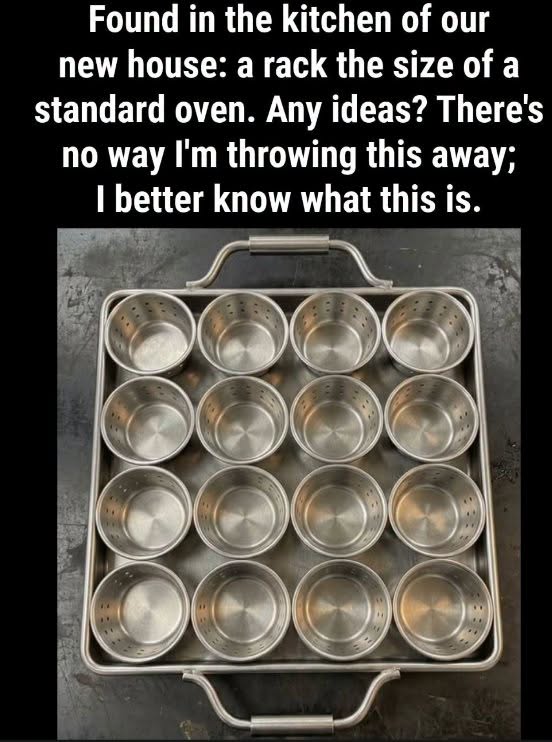
That’s exactly what makes finding a rack about the size of a standard oven in a new house so intriguing.
At first glance, it might look like an ordinary metal rack. But its size raises an interesting question: why would someone need a rack that large in a kitchen?
Was it part of an old appliance? A baking rack? A cooling shelf? Or something designed for a kitchen feature that has since disappeared?
There are several possibilities, and the rack’s shape, construction, and location can offer some useful clues.
Let’s see what this unusual kitchen discovery might be!
What Could a Rack the Size of an Oven Have Been Used For?
A large metal rack found in a kitchen could have served several purposes. The most likely explanation depends on whether it was built into a cabinet, stored inside an appliance, or simply left sitting in the room.
Here are some possibilities worth investigating.
1. An Oven Rack or Replacement Oven Shelf
This is one of the first things I’d check.
Older ovens and ranges sometimes came with racks that look different from the shelves used in modern appliances. Some are heavier, wider, or designed with unusual hooks and supports.
If the rack is approximately the same width and depth as the oven cavity, it may be an original oven shelf or a replacement rack.
Look inside the oven for side rails, grooves, or supports that match the rack’s edges.
If the rack slides neatly into place, you’ve probably found a strong clue!
2. A Rack From an Older Range
Here’s another possibility: the rack might belong to an appliance that is no longer in the house.
Perhaps the previous owner replaced an older range but kept some of its accessories. Or maybe a built-in cooking unit was removed during a renovation, leaving a few unusual pieces behind.
If the rack looks too large or oddly shaped for the current oven, consider whether the kitchen once had a different appliance configuration.
Check for unused mounting holes, empty appliance spaces, or cabinets that appear to have been modified.
Sometimes the missing piece of the puzzle is the appliance itself.
3. A Large Baking or Cooling Rack
If the rack is made from open metal wire, it might have been used for baking or cooling.
Large cooling racks are useful in busy kitchens because they allow air to circulate around baked goods after they come out of the oven.
They can also provide a place to rest roasting pans, baking trays, or other hot cookware, provided the rack is designed to support the weight and withstand the heat.
But size matters here.
A rack intended for cooling baked goods may look quite different from a heavy-duty oven shelf, particularly around the edges and supporting feet.
4. A Rack From a Warming Oven or Warming Drawer
Some kitchens include warming drawers or separate warming compartments that keep prepared food warm before serving.
These compartments may have removable shelves or racks that allow warm air to circulate around dishes.
If the rack came from a built-in cabinet or a separate warming appliance, this is worth considering.
Look for a drawer or compartment that has rails, brackets, or dimensions that match the rack.
One important clue: a rack designed for a warming appliance may be smaller than a full oven rack, even if it looks surprisingly substantial.
5. A Commercial-Style Kitchen Rack
Some homes have oversized cooking equipment, particularly kitchens designed for serious baking, entertaining, or frequent large-batch cooking.
A large rack could have been used with a commercial-style oven, a heavy-duty range, or another specialized kitchen appliance.
This becomes more plausible if the house has an unusually large cooking area, an oversized range, or evidence of a previous catering or food-preparation setup.
Still, the rack’s size alone doesn’t prove it came from a commercial kitchen.
The mounting features and metal construction are much more useful clues.
Could It Be Part of an Old Kitchen Cabinet?
Absolutely.
Not every rack found in a kitchen belongs to an oven.
Some cabinets have removable wire shelves, pull-out racks, drying racks, or custom-built storage components.
If the rack has slides, brackets, hooks, or attachment points along its sides, inspect the nearby cabinets carefully.
You might find:
- Empty shelf supports
- Matching metal rails
- Unused screw holes